
Stockers, baristas, servers and hotel staff—retail and hospitality workers are as visible as they are essential. Yet as they strive to manage unpredictable schedules and customer interactions, they’re also forgotten by most health plans. But not Skai Blue Cross Blue Shield.
Skai already supports one of the nation’s largest retailers, meeting workforce needs after hours, between shifts and in moments of crisis. Our experience has shaped benefit designs that offer better solutions while addressing more than just their symptoms.
Skai is healthcare designed for those who spend their days—and nights—on their feet. It’s flexibility to fit the realities of retail and hospitality shift workers.
The strain behind the smile
What looks like resilience on the outside often hides significant strain. Many retail and hospitality workers juggle unpredictable schedules with home responsibilities. Irregular hours can mean skipped meals, lost sleep and delayed care. And when something goes wrong, urgent care or even the ER can feel like the only option.
These stresses can also increase the risk of injuries, like slips, burns or repetitive strain. Many workers go to the ER for minor issues that could be treated more efficiently elsewhere, or they wait until a problem becomes more severe.
Despite skewing younger—with a median age of 39 in retail and just 29 in hospitality—these sectors face significant health risks that often go unaddressed. Nearly 1 in 3 retail workers are impacted by obesity, underscoring the need for consistent preventive care and early intervention. And because hospitality is among the most racially and ethnically diverse industries, with roughly 30% of its workforce identifying as Hispanic, care must also be culturally responsive and linguistically accessible to be effective.
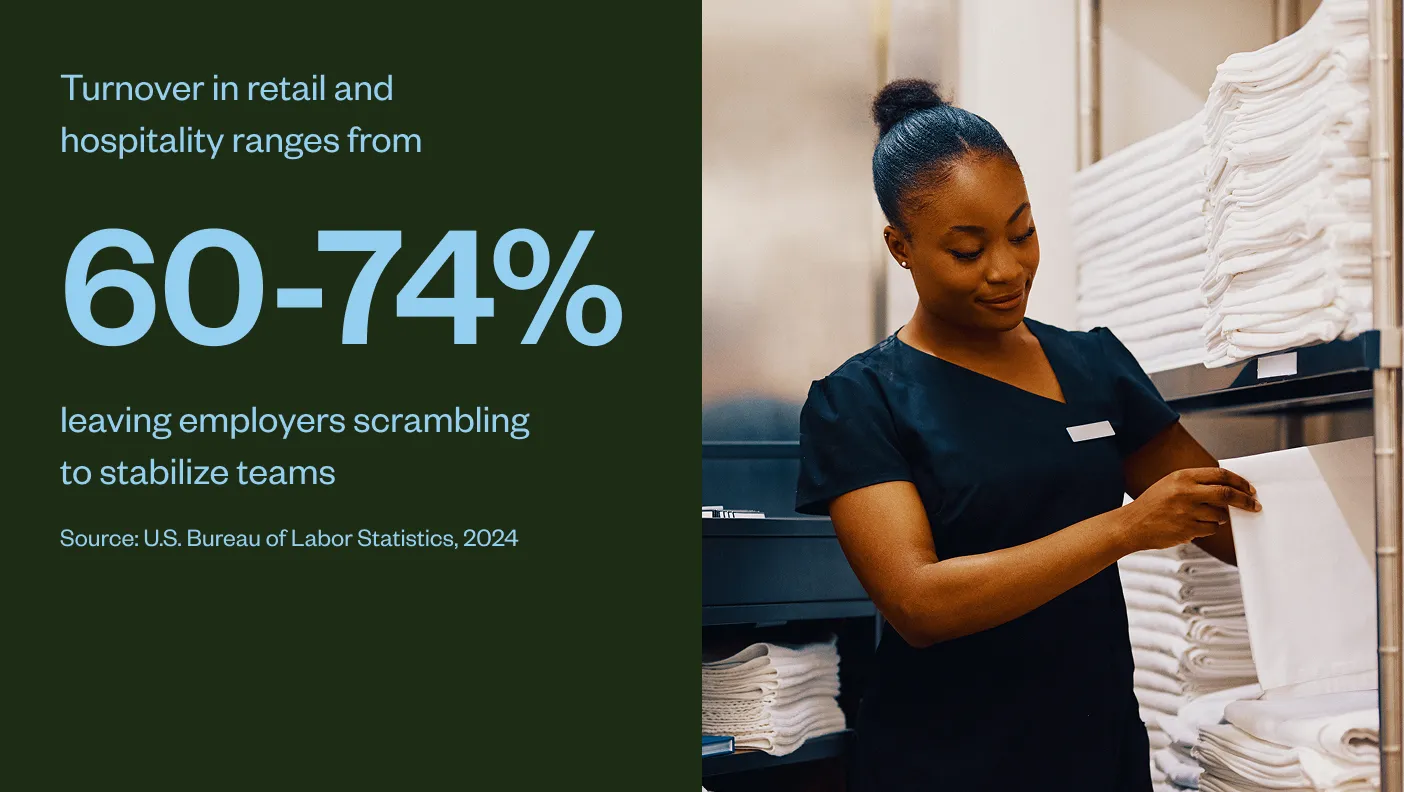
The stress is more than physical. Constant customer interaction, changing schedules and high team turnover take a toll on mental health. As a result, many turn to coping mechanisms like smoking or alcohol use, quietly increasing their risk of negative health consequences. Some younger workers have never had a primary care provider, while others face language barriers and uncertainty navigating a complex healthcare system. In some cases, preventive care is skipped altogether.
What they need—and rarely get
To thrive, retail and hospitality workers need a health plan that recognizes the unique, around-the-clock demands of their lives.
- Access beyond the 9–5 – Care available after hours, between shifts and across multiple job locations
- Flexible support – Guidance that adapts to unpredictable schedules and high turnover, going beyond claims data to provide targeted and predictive interventions
- Trust and relevance – Bilingual, culturally competent care that builds confidence, not confusion
- Mental health that fits – Convenient, stigma-free support that feels human and practical
- Prevention made possible – Help catching risks early, so small issues don’t become big ones
How Skai closes the gaps
We designed a whole-person, always-on approach to catch people before they fall through the cracks.
- Better access – Triage and crisis support from real people, minimizing ER use for minor but urgent issues like burns and cuts
- Clear guidance – Access to built-in navigation that demystifies benefits, so no one overlooks resources they qualify for
- Proactive outreach – Triggered by real-world signals—like repeat injuries, stress indicators or missed preventive care—not just claims
- Behavioral support – Access to integrated mental health support that reduces stigma and accommodates schedules
A paradigm shift, applied
Imagine a worker juggling shift schedules while caring for a young child. With a traditional plan, her only options might be waiting until morning, heading to the ER or pushing through until it gets worse.
With Skai, the story shifts. A 10:30 p.m. call connects her in minutes to a behavioral health triage team that addresses the immediate crisis and sets a plan in motion. Within days, she’s matched to a therapist who understands her cultural and language needs, provides her with resources for therapy, coaching and community-based financial resources and enrolls her in coaching that flexes with her schedule. Crisis averted. She gets a good night’s sleep.
Finally, a health plan that meets people where they work
This isn’t about one employee. It’s about building loyalty, resilience and retention in demanding, high-turnover industries. And a health plan that meets people where they work, addressing the realities they face around the clock.